
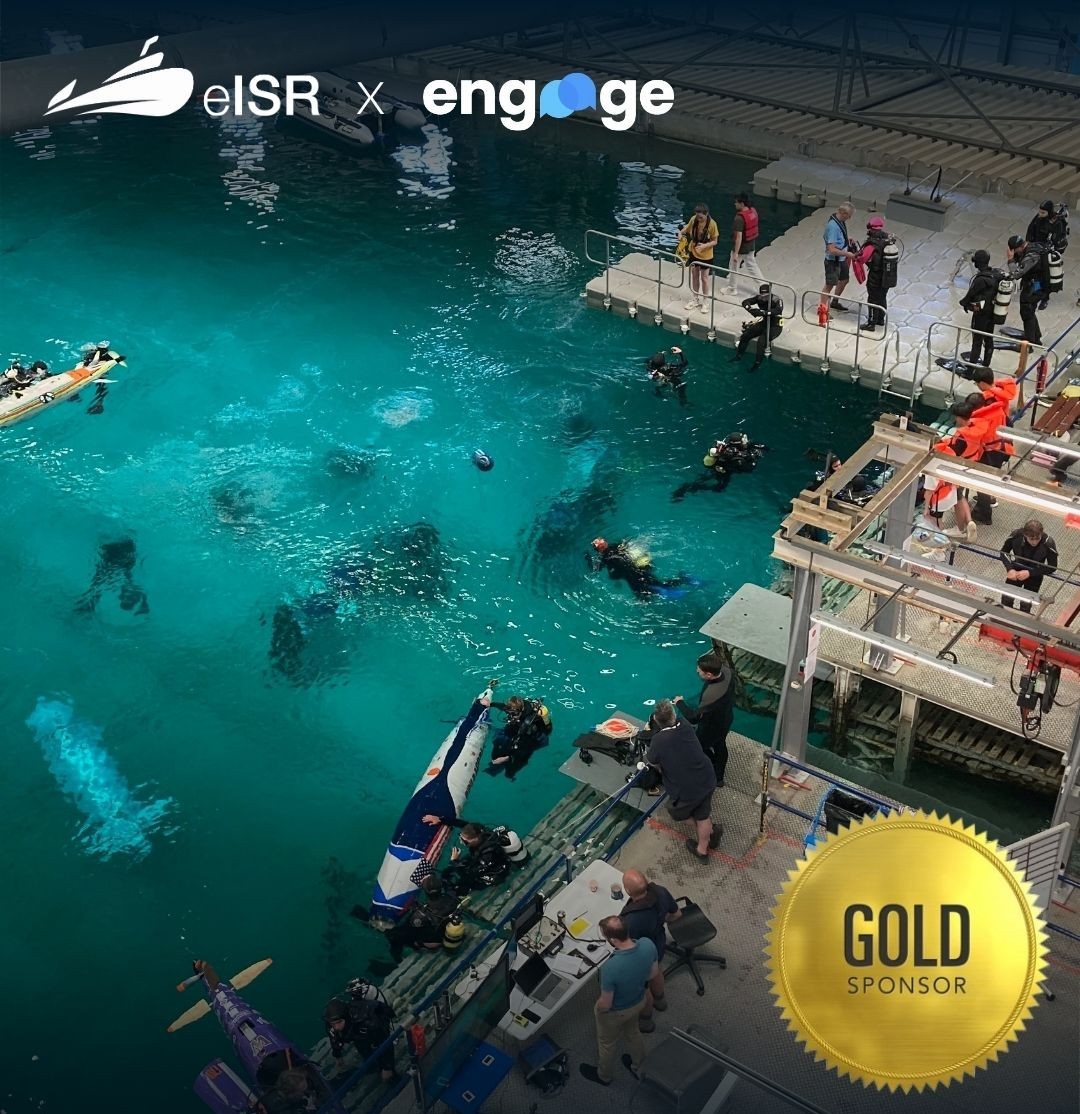
Engage is proud to be a Gold Sponsor of the European International Submarine Races (eISR) 2026, and even prouder that our own Claire Machin, Principal Consultant, will support the event as a judge. Taking place in Gosport , from 29th June - 10th July 2026, eISR brings together innovative student teams to design, build and race human-powered submarines.
eISR brings engineering to life, showing how ideas translateinto real-world solutions through hands-on innovation. It highlights teamsworking together to solve complex problems and perform under pressure,reflecting the environments our own people operate in.
At Engage, our work across engineering, digital programmedelivery and technical consulting relies on the same foundations:collaboration, critical thinking and delivering results in high assurancesettings. As an employee-owned business, we value shared success,accountability and continuous improvement, making this event a natural fit.
Claire is a Principal Consultant at Engage, specialising in complex engineering and technical project delivery. She brings experience in design, development engineering, test oversight, safety and compliance, as well as maritime leadership. This year, Claire joins the judging panel alongside naval architects, submarine engineers and experienced pilots. Together, they review the student-designed human-powered submarines for safety, design and performance. We asked Claire to share more about the event, her role as a judge and what makes eISR such a unique engineering challenge.
Q - For anyone new to eISR, what makes this event so special?
CM - It is a unique challenge, because the teams are designing a submarine so there are a lot of things to consider. The hull form needs to be designed to house the pilot, allow movement, include mechanisms for propulsion and steering, and be as aerodynamic as possible so the boat moves efficiently through the water. They also need to control the boat as it moves forward, keep it submerged and steer it through the tank and slalom section.
In addition, you have a human pilot in the water on scuba gear so there are many life support factors to consider, including escape or calling for help if anything goes wrong. It is the ultimate challenge.
The teams decide the propulsion method, how power is generated, how the boat will steer and how to keep it level in the water column. There is a wide variety of options and categories for propeller and non-propeller boats. Some teams choose bio-mimetic options, others have electrical systems for depth control. There is a lot of innovation in both design and build. We have had traditionally built wooden boats and others which have been 3D printed. Teams decide what is possible based on the resources they have.
During the competition the size and make-up of teams varies. Some have pilots who are not on an engineering path but are the right size and fitness for the boat. They work with the team to refine fit, handling and escape. It’s a bit like a professional driver working with a race team.
There is also a lot of collaboration between teams during the competition. It can be hard to bring enough people or equipment due to cost. Teams loan divers and equipment to each other. It reflects a strong maritime spirit where everyone is in the same position and helps where they can.
Q - What makes human-powered submarine racing such a fascinating engineering challenge?
CM - There are so many challenges, you have the environment which does not support life without equipment, you have pressure because you are underwater, you are also trying to move through the water. There are corrosion problems because of the water, so material selection is important. Your engine is also your pilot and you need to consider how to transfer as much power as possible from them to the propulsion system. You also need to move forwards, backwards at times, and from side to side while staying submerged. It is complicated, it is the ultimate engineering challenge.
Q - What does your role as a judge involve at eISR 2026?
CM - As judges our main role is to ensure that the rules are upheld and everyone is treated fairly. The teams submit a variety of documents, all the diving related documents go to the dive supervisor, and all the design documents go to the judges. As we often have more teams than places the documentation submission can often be the deciding factor. The teams need to produce specifications, videos of the boats in action, and a design report all of which are reviewed and marked by the judges. These marks go towards the final score so its not just about boat performance during the race.
Pre-race, the judges review each boat to check it passes a dry inspection. Once complete they can put their boats in the water and then pass the wet test before they qualify to race.
During the races the judges monitor the boats on the course, they track the boats path and mark any deviations or penalties incurred. There are penalties for things like, broaching, hitting markers, dragging markers etc. They also do an independent time check of the race.
Q - How does your own background help you when judging an event like this?
CM - My background is in design and manufacturing, which includes test and commissioning, so I know what it takes to go from a blank sheet of paper to a finished product that you test and what to do when it doesn’t quite work how you envisioned.
Having worked with life support systems in the past I can appreciate the challenges the teams face. There are so many facets to producing a design where you need to qualify and justify each decision, ensuring the safety of the teams and the pilots is paramount.
My previous experience as a lecturer helps as well when it comes to marking the reports and assessing the build quality and manufacturing challenges the teams face. I have also dived a little in the past and that gives me an understanding of what it is like to be underwater trying to perform tasks.
Q - What do events like eISR tell you about the next generation of engineers?
CM - I have been a judge for the eISR for many years and the team’s ingenuity and enthusiasm is always a privilege to experience. The teams have some great ideas, and they are willing to try new things and innovate. The teamwork that an event like this fosters is great, teams often have groups who are dedicated to a system or support systems, and they all need to work together and communicate to get results. Skills like this will be so important in their future careers, and for the non-engineers who support,they get valuable experience as well, from project management, procurement, marketing, and the variety of backgrounds the pilots come from they demonstrate an amazing variety of skill and experience they can lean on in the future.
Q - Why do you think industry support and sponsorship matter for events like this?
CM - Without industry partners this event would not happen. QinetiQ have an amazing facility and to allow the teams access for 2weeks is fundamental to the event, there are very few places in the world that have resources like Haslar, we are very lucky to have a test facility like this in the UK and have access. Industry support means we can fund the event in terms of people and financially, many of the judges and support team are released from their workplace, at significant cost, to attend. It also gives the teams an opportunity to talk to people from industry not just the judges and support staff but the sponsors who attend. As a student it can be difficult to find the people who do what you want to do and ask them questions, to get that unique insight into what companies do daily, the kinds of projects that are out there and the skills they are looking for.
The financial support is critical for the event to run, but there is huge value in the conversations that the sponsors have with the teams, and the experience the teams have will be with them for the rest of their lives.
Where possible we try to host events at places that would interest the students, in the past we have had speakers delivering talks on maritime topics, and local school children coming in and talking to the teams, the inspiration goes in all directions!
Supporting Future Engineering Talent
At Engage, we are proud to support events like eISR, which play a vital role in showcasing the talent, creativity and determination of the next generation of engineers. As a Gold Sponsor, we see first-hand the impact these experiences have in developing technical capability, confidence and collaboration in a real-world environment.
Beyond the engineering challenge itself, it is the teamwork and support between the teams that really stands out. Events like eISR give students the opportunity to gain hands-on experience, solve complex problems and develop skills they will carry with them throughout their careers.
We look forward to following their progress and are proud to support the talent shaping the future of engineering.


.png)
Engage Technical Solutions Ltd,
Units 1 & 4 Forest Gate, London Road, Chippenham SN15 3RS
Engage Technical Solutions Ltd
© 2024


